Article ·
Is Russia Really Sovereign Over the Price of Its Own Oil?
Russia is one of the main players in the global energy system. And yet, despite that status, the price of Russian oil closely tracks Brent crude. Urals futures were launched precisely to move away from that dependence — but to this day, prices are still largely set off the Brent benchmark.
As a consequence, Russia does not have full sovereignty over the pricing of its own commodity: that price is determined in international markets. Several studies examine this in more depth. Bouoiyour et al. (2015) analyze the relationship between oil prices and Russia's real exchange rate across different time horizons. Vasiljeva et al. (2019) look at how exchange-based trading could give Russia more direct control over crude pricing. Both arrive at a similar prescription: state oil purchases, so the domestic market has enough liquidity and traders get more stable pricing.
More concerning are the points raised by Polbin (2017) and Chernyaev & Kreydenko (2018). Polbin estimates the impact of terms-of-trade shocks on Russian output, investment, and consumption using a VECM model, and finds that a permanent oil-price increase produces a short-term boom followed by a negative contribution to long-term growth. Chernyaev and Kreydenko argue that Russia's oil and gas industry is already operating with exhausted industrial potential, facing challenges that threaten its energy security.
Put together: Russia is trapped between an international market that dictates its prices, an economic structure that suffers when oil prices rise too far given its dependence on the sector, and a physical infrastructure that keeps getting older.
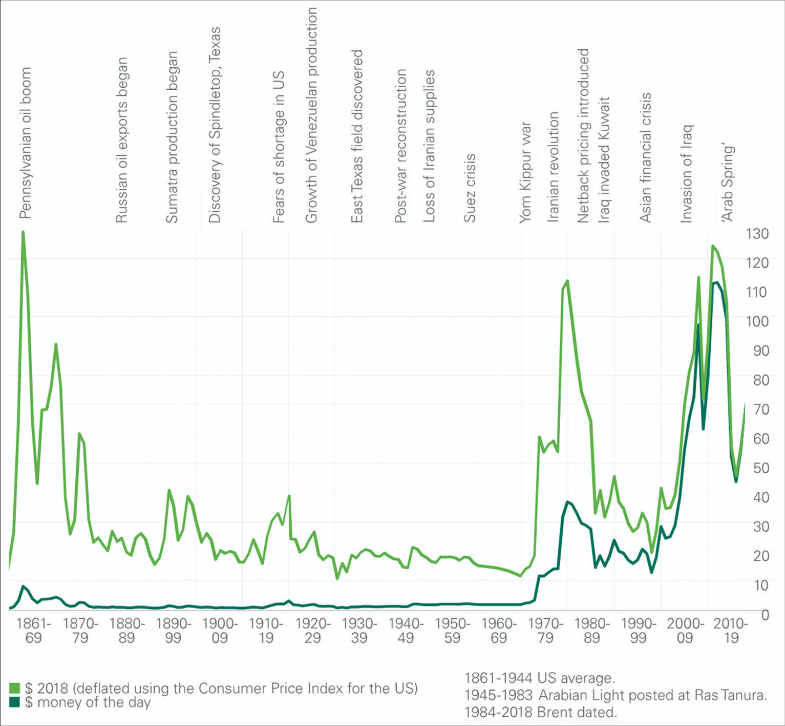
Before going deeper into Russia specifically, it's worth seeing how control over oil prices has shifted over time — from large international corporations, to producing countries organized as OPEC, and ultimately to financial markets.
Stage 1: The rise of OPEC (1970s)
Until the late 1960s, the global oil market was dominated by a small group of major international oil companies known as the “Seven Sisters” (Exxon, Shell, BP, and others). They controlled not just extraction but pricing, under concession systems that heavily favored them. The 1970s marked a structural shift in that balance of power, driven by producing countries organized within OPEC.
OPEC quickly became a political weapon. During the 1973 oil crisis, in response to Western support for Israel in the Yom Kippur War, Arab OPEC members imposed an embargo; prices spiked and shortages hit Western economies hard. Between the collapse of Bretton Woods (1971) and that 1973 shock, a new monetary order emerged: oil-exporting countries — Saudi Arabia especially — agreed to price oil exclusively in U.S. dollars, in exchange for American security guarantees in the Gulf, protection of allied regimes, and access to global financial markets. A second shock followed in 1979, triggered by the Iranian Revolution.
The more lasting change, though, was the reassertion of sovereignty over natural resources by producing states. Countries nationalized their oil industries or renegotiated the terms foreign companies operated under — moving from concession systems, where foreign firms held broad rights over exploration, production, and profits, to long-term contracts and production-sharing agreements, where the state retained ownership and dictated the terms.
Production was nationalized, but transport largely stayed private, and FOB (free on board) pricing became the standard: oil is priced at the loading port, and buyers take on transport, insurance, and related risk from there. So producing countries controlled the value of crude at the source, while international oil companies kept their influence through tanker fleets and global distribution.
The rise of national oil companies (NOCs) like Saudi Aramco and PDVSA wasn't just ideological “resource nationalism” — it was economically rational once governments realized that most of the value in oil comes from owning the reserves, not just operating them. Nationalizing captured resource rents, tax and royalty flows, and control over production pace, and turned oil into a policy tool: funding welfare states in the Gulf, supporting industrialization, or serving as leverage in foreign policy. NOCs aren't just companies — they're extensions of the state.
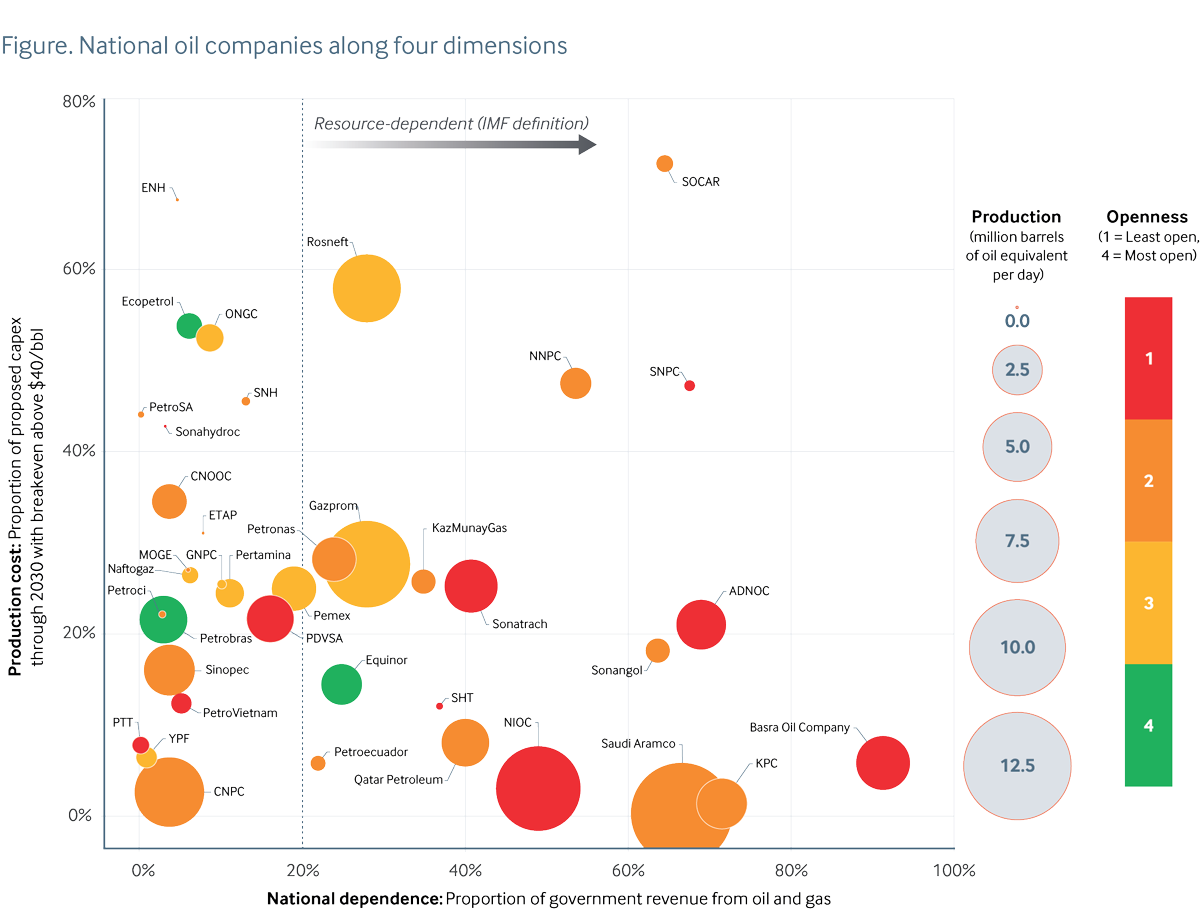
By this stage, OPEC was setting an Official Selling Price, coordinating production among members, and responding strategically to geopolitical events like the 1973 embargo. For the first time, pricing power had shifted decisively from private corporations to sovereign states.
Stage 2: Stabilization and the role of Saudi Arabia
After the turbulence of the 1970s, the late 1970s and especially the 1980s brought an attempt to restore stability. The U.S. didn't negotiate with OPEC as a bloc — instead it built a special strategic relationship with Saudi Arabia, which took on the role of “swing producer,” raising output to cool prices when they rose too high and cutting it to support prices when they fell too low. That role came at a cost: Saudi Arabia often sacrificed market share while other members overproduced and captured the benefit of higher prices. The tension became especially visible in the mid-1980s, when Saudi Arabia temporarily abandoned the role, contributing to the 1986 price collapse.
The result was a kind of informal order — OPEC setting production targets, Saudi Arabia enforcing discipline indirectly through its own output. Prices weren't fully free-market, but they weren't strictly fixed either: a fragile equilibrium, stable enough to avoid extreme volatility but dependent on cooperation that was often imperfect.
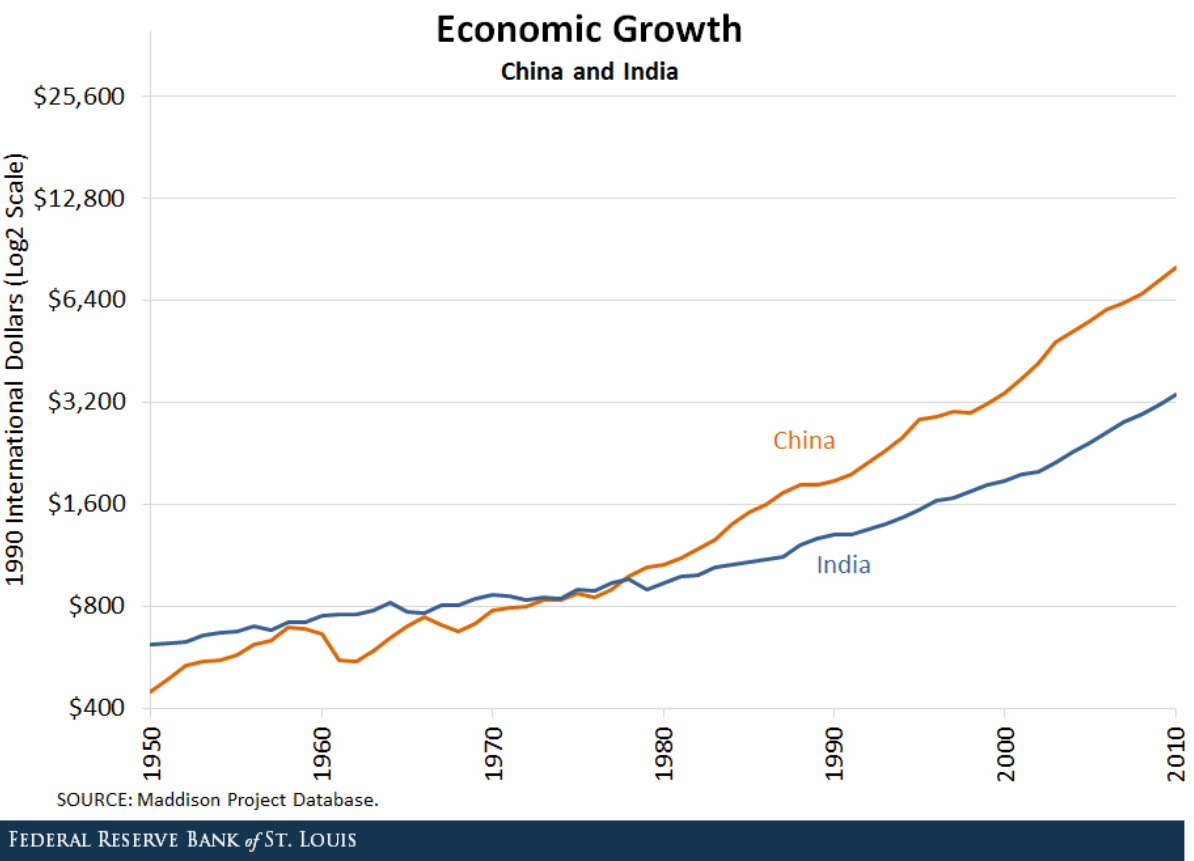
Meanwhile, on the demand side, China and India began accelerating industrialization and urbanization — the same dynamic behind the rising export volumes and Baltic Dry Index I've written about before. That meant surging energy consumption, growing dependence on imported oil, and long-term upward pressure on global demand. In the 1980s this was still an emerging trend; by the 1990s and especially the 2000s, it became a decisive force reshaping the oil market.
Stage 3: The strategic turn of 1998
Russia gained new importance in this stage after the collapse of the USSR in 1991: the new Russian state shifted from a planned economy to an exporter and participant in the open market. Russia saw oil as a source of foreign currency, but didn't coordinate with OPEC — which destabilized the group, as other members produced and exported more, leading to oversupply and falling prices.
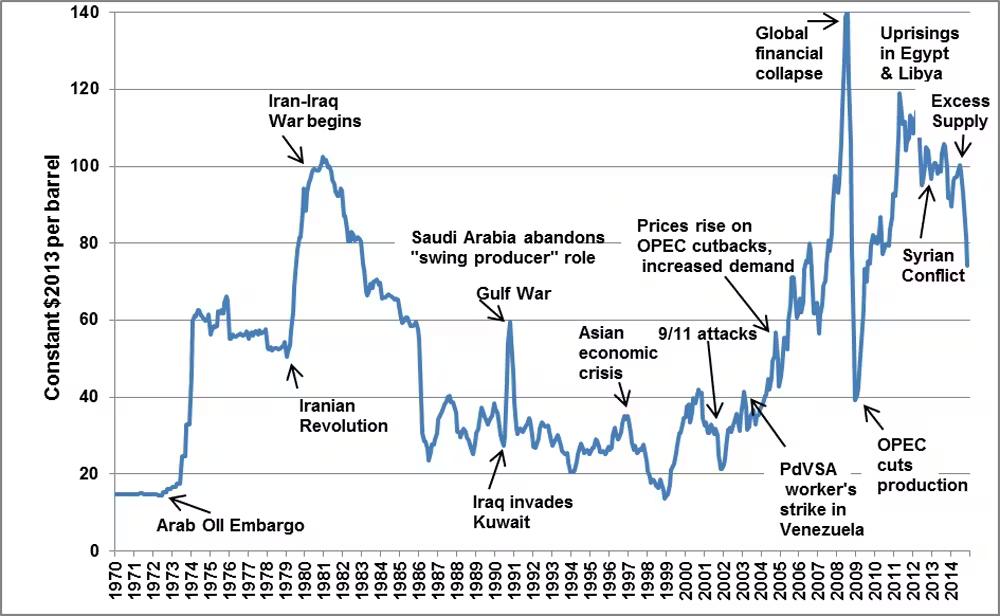
Things reached their worst point with the 1997 Asian Financial Crisis — a loss of confidence in Southeast Asian currencies, starting with the Thai baht. After years of heavy foreign capital inflows and rising debt, the bubble collapsed: investors pulled their money and rushed into dollars, currencies devalued sharply, and dollar-denominated debt became far more expensive to service. Capital flight, bank failures, and a deep recession followed.
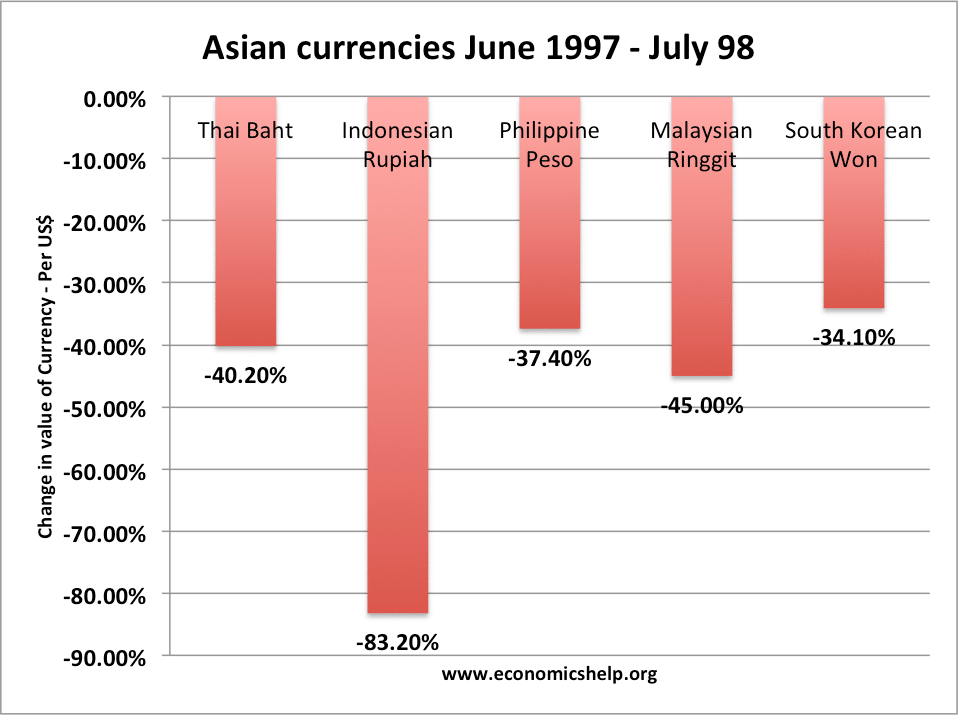
The recession cut regional demand for oil, adding to the fall in global crude prices — down to around $10 a barrel, driven by weaker demand and a supply glut from major producers. For oil exporters like OPEC members and Russia, that was a severe fiscal shock. In Russia's case, collapsing oil revenue left the state unable to service its external debt, triggering the 1998 default, a sharp ruble devaluation, and a banking crisis driven by insolvency and loss of confidence.
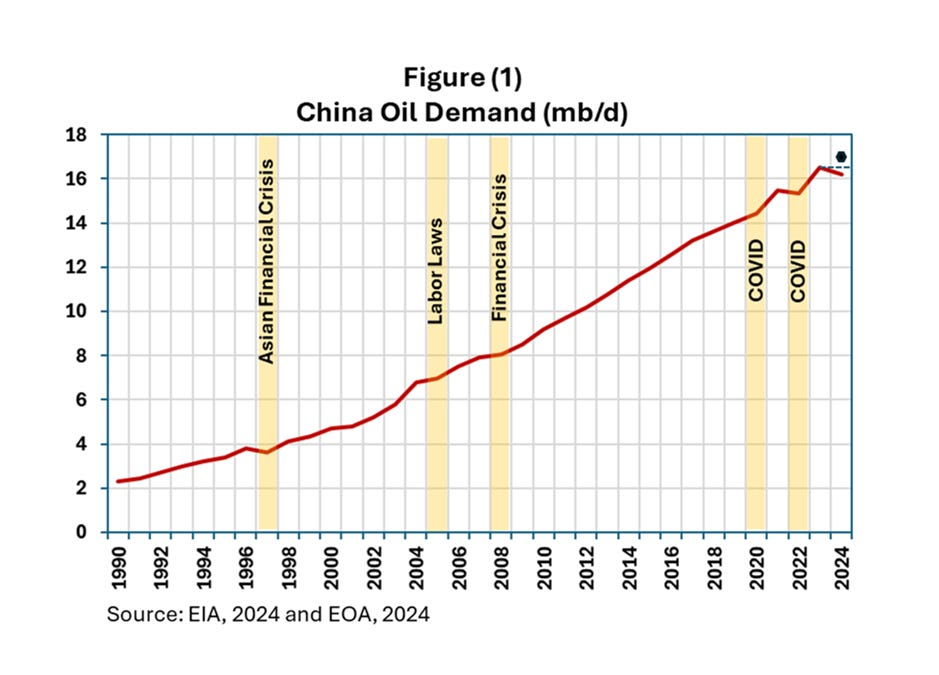
The real shift after 1998 was one of mindset. The 1970s were defined by limited supply, with prices mainly driven by supply shocks and armed conflict. After the Asian crisis, it became clear that OPEC needed to manage risk and prices more actively — and from that point on, the financial system and demand from Asia, especially mainland China, increasingly determined the value of oil. Between 1998 and the early 2000s, financial hedging instruments for oil pricing multiplied, marking crude's full entry into the futures markets.
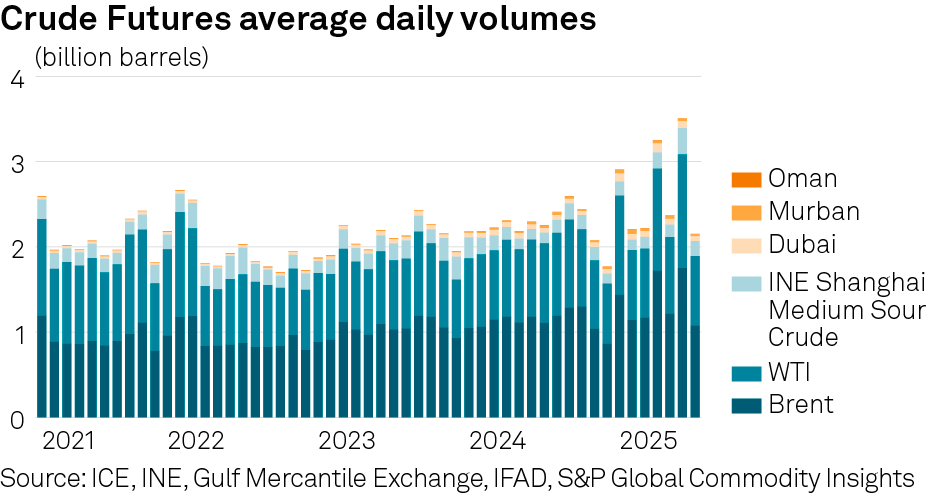
Investment funds, banks, and hedge funds began operating heavily in futures and options on crude, and oil stopped being just a physical commodity — it became a global financial asset that also prices in interest rates, inflation, and global risk conditions. That adds a layer of volatility that has nothing to do with the physical consumption of oil: large financial flows can move the price without any change in actual supply or demand.
For oil-exporting countries seeking economic independence, that's bad news. Russian Urals crude is increasingly priced off dynamics well outside Russia's control. Although Russia remains a major exporter, the price of Urals is no longer primarily set by its own production and export balance — it's set by international benchmarks like Brent or WTI, which are themselves shaped by global financial markets. Central bank decisions, speculative flows, or shifts in market sentiment can move the value of Russian oil even when Russian output hasn't changed at all.
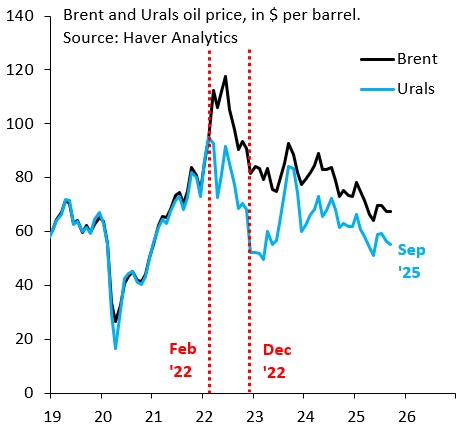
In other words, the price of Urals has stopped being a “national reflection” of Russian supply and become a globalized price, determined by foreign markets and international financial actors. That increases both the volatility of Russian state revenue and its dependence on global market behavior — well beyond the physical fundamentals of the oil itself.